
105%
increase in cross-functional collaboration
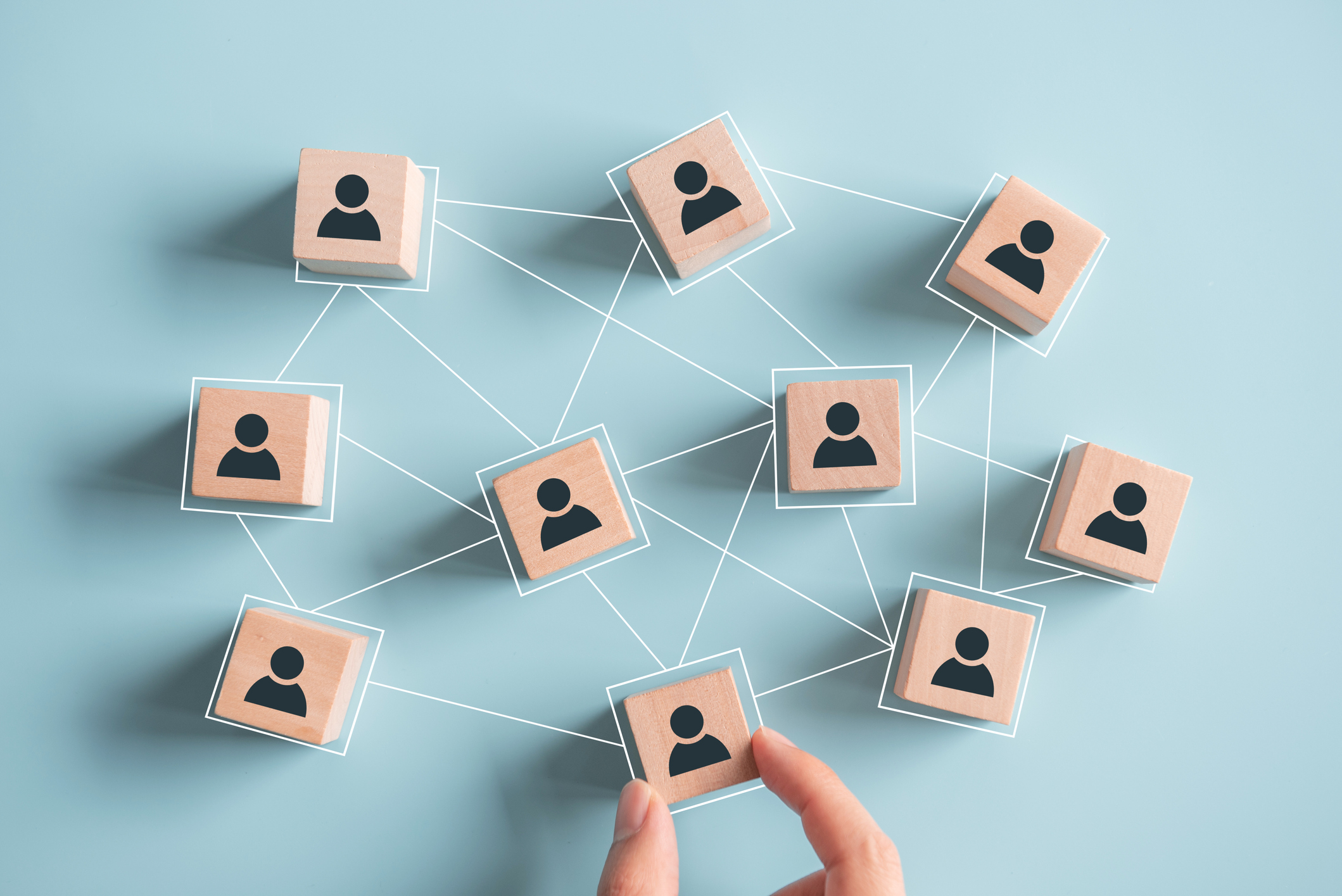
Many organizations are operating within a structure designed for an earlier version of their business. As strategy evolves, reporting lines, roles and processes often lag behind, which can result in execution drag: work that takes longer, costs more and reaches fewer people than it should. We start with what your strategy requires and design the organization to deliver it.
Let's Talk
When roles overlap, work gets duplicated, decisions get relitigated, and people spend their energy negotiating boundaries instead of delivering. We define roles and accountabilities against what your strategy requires, so everyone knows what they own and what they can expect from everyone else.

Decisions that need excessive approvals, or that keep escalating to senior levels, limit how quickly the business can execute. We identify where decisions are getting stuck, who should be making them, and what has to change so they happen at the right level and at the right speed.

Processes built for a smaller or differently shaped business lead to inefficient handoffs, approvals and rework that slow teams down. We map how work gets done, uncover where it stalls, and redesign the workstreams that cost the most time.

We use network analysis to show where collaboration is and is not happening, then redesign structure and process so the connections the strategy depends on actually form.

In fast-growing organizations, roles often evolve without a standard framework, which can lead to inconsistent titles, misaligned levels, and opaque or misunderstood career paths. Our Career Architecture Optimization work standardizes role profiles, defines equitable leveling criteria, and builds clear maps for vertical and lateral growth. Clients see 10 to 15% performance improvement, 25% higher engagement, and 75% higher intent to stay.
When roles overlap, work gets duplicated, decisions get relitigated, and people spend their energy negotiating boundaries instead of delivering. We define roles and accountabilities against what your strategy requires, so everyone knows what they own and what they can expect from everyone else.
Decisions that need excessive approvals, or that keep escalating to senior levels, limit how quickly the business can execute. We identify where decisions are getting stuck, who should be making them, and what has to change so they happen at the right level and at the right speed.
Processes built for a smaller or differently shaped business lead to inefficient handoffs, approvals and rework that slow teams down. We map how work gets done, uncover where it stalls, and redesign the workstreams that cost the most time.
We use network analysis to show where collaboration is and is not happening, then redesign structure and process so the connections the strategy depends on actually form.
In fast-growing organizations, roles often evolve without a standard framework, which can lead to inconsistent titles, misaligned levels, and opaque or misunderstood career paths. Our Career Architecture Optimization work standardizes role profiles, defines equitable leveling criteria, and builds clear maps for vertical and lateral growth. Clients see 10 to 15% performance improvement, 25% higher engagement, and 75% higher intent to stay.
Organization design is the bridge between the strategy you set and the results you get. We look beyond reporting lines and integrate structure, process, and people practices into organizations and operating models that are fit for purpose.
Every design decision traces back to the strategic intent. Structure, roles, and decision rights are designed to execute the strategy.
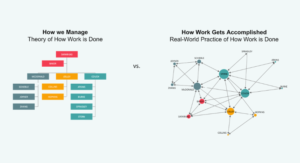
If formal structure is the theory of how organizations work, informal networks are the real-world practice. We use organizational network analysis to uncover how employees truly interact to share information, make decisions and solve problems.
People own what they co-create. We charter a Design Team of client leaders, and where relevant board members and investors, to build the design with us.
We work with organizations to bring the new design to life, ensuring the transition is smooth and the new design delivers immediate and long-term results.
Our guide describes how we approach Purpose-Driven Design to ensure all aspects of an organization work in unity toward a common goal.
Learn about the seven leadership development experiments you should try right now.
increase in cross-functional collaboration

reduction in cycle time

increase in new product development

“People were using the tools as soon as we had developed them, before the project was formally closed. The adoption rate was that rapid.”
Our practitioners include PhDs in organizational psychology, behavioral scientists, and experienced consultants and operators who have designed organizations for more than 30 years. CLA team members hold Advisory Board seats at the Organization Design Forum.
Meet UsCommon questions about how we approach organization design, what network analysis reveals, and how this differs from a reorganization.
Organization design is the deliberate shaping of an organization’s structure, roles, decision rights, and operating processes to enable it to achieve its strategic goals. When organizations are well-designed, work flows efficiently, accountability is clear, and people make better decisions faster. When they are not, good strategies stall: information gets siloed, decisions slow down, and the organization works against itself.
Organizational Network Analysis (ONA) is a methodology for mapping the informal networks that actually determine how information flows, decisions get made, and work gets done in an organization. Unlike org charts, which show formal reporting lines, ONA reveals who people actually go to for advice, information, and collaboration. At CLA, we use ONA to uncover hidden leaders, identify collaboration gaps, inform org design decisions, and guide talent development interventions.
A reorganization typically refers to changing the formal reporting structure. Organization design is a more comprehensive process that addresses the full set of factors that determine how an organization performs: not just structure, but decision rights, operating rhythms, role clarity, and informal networks. CLA’s Purpose-Driven Design approach ensures that all elements are addressed together.
No, and the reactive version is the expensive one. Most design work starts after execution has slowed or a reorganization has failed to deliver, at which point you are unwinding habits people have already formed. The higher-return moments are earlier: before a growth push, ahead of an acquisition, when a new strategy is set, or when the business has outgrown a structure built for a smaller version of itself. There is a second problem with reacting. Many reorganizations begin by drawing boxes on a chart before anyone has defined what the organization is trying to achieve or the best way to accomplish the work. Form should follow function. We start with purpose and design the structure to fit it, which is why we call it Purpose-Driven Design.
Great organization design delivers three main benefits: (1) Operating excellence, because work takes place through a structure purpose-built for it, rather than around one that slows it down. (2) Adaptability, because an organization designed for how people really work can react more effectively to a change in conditions. And (3) employee engagement, because people do better work when they know what they own, who decides what, and how their work connects to everyone else’s. Organization design is the bridge between the strategy you set and the results you get.
When something upstream has changed and the structure has not caught up. The most common triggers are a new strategy, a persistent performance problem without a clear single cause, a shift in the market you compete in, or a transaction such as an acquisition, merger or divestiture. The common thread in all of these situations is that the organization was designed previously for a set of conditions that are no longer relevant.
Design is the process and structure is one of its outputs. Organization design starts from what your business strategy requires and works out how your organization should be arranged to deliver it: what work needs to be prioritized, who is responsible for doing it, how decisions get made, how information flows, and what has to be true culturally for any of it to be sustained. Structure (the reporting lines and the org chart) is the most visible result of that process but not the whole of it. Processes, incentives and habits have to be intentionally designed alongside the structure for a new structure to be effective.
We look at people practices as part of our organization design engagements. Structural changes are most successful when there is alignment between the performance metrics an organization measures, the behaviors it rewards and the criteria it uses to promote. For instance, if a performance management program measures individual output when the strategy depends on cross-functional collaboration, misalignment is inevitable. Similarly, a compensation structure that was built for a different strategy, or a development program aligned to skills and behaviors that are no longer critical, will create drag on performance. We look at all these factors together to design an organization equipped to execute.
Perspectives on organizational structure, operating model design, and the systemic factors that drive or undermine execution.
Seeing How Work Really Gets Done Graphite and diamond are made of exactly the same thing: carbon. Yet graphite is…
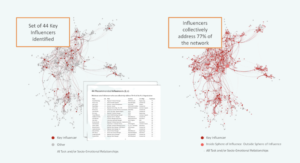
Every organization has people whose opinions carry unusual weight. When they get behind a new strategy, others follow. When they’re…
The behaviors your organization promotes, discourages, and is willing to accept can have a profound affect on your business performance. Design them intentionally.
Learn More